The short answerStart with the markings molded into the figure - manufacturer, copyright date and country of origin - then compare the sculpt, paint, accessories and packaging with a known example of the release you think it is. Remember that a molded date usually records the copyright, not the year the figure was made, and that many classic lines have official modern reissues.
Markings: what they tell you (and what they don't)
Manufacturer markings
- What it is
- The company name molded into the figure, usually on the back, legs or feet.
- How to check
- Use a flashlight at a low angle; markings are often faint.
- Why it matters
- Identifies who made it. For vintage Star Wars, for example, collector references explain that GMFGI refers to General Mills Fun Group Inc., Kenner's parent company at the time (Star Wars Figure Variations glossary).
- What to photograph
- The marking, sharp and readable.
- Be careful
- Missing or unreadable markings on a figure that should have them.
Copyright dates
- What it is
- A year molded next to the manufacturer name.
- How to check
- Read it, but do not treat it as the production year.
- Why it matters
- Collectors note that these dates usually record the copyright or license year, and the same date can appear on figures made years later.
- What to photograph
- The date marking.
- Be careful
- Assuming the date proves the figure is from that year.
Country-of-origin (COO) marks
- What it is
- Where the figure was made - for example Hong Kong, Taiwan or China.
- How to check
- Usually near the other markings.
- Why it matters
- Some collectors track COO variations. The Star Wars Figure Variations COO guide is one example of a collector reference.
- What to photograph
- The COO marking.
- Be careful
- A COO that does not appear in references for that figure.
Beyond the markings
- Sculpt differences. Modern reissues are often re-sculpted or updated. Compare face, hands and joints with reference photos of the exact release.
- Paint applications. Check which details are painted and how. Reissues and variations often differ.
- Accessories. Reproduction weapons and parts are common for popular vintage lines. The Imperial Gunnery - a collector reference for vintage Star Wars weapons - notes that reproductions have become harder to detect.
- Packaging. Retro-styled packaging is used on official modern lines. Check dates, barcodes and legal text on the card back.
Known modern lines that resemble vintage releases
These are genuine, officially made products. They are not fakes - but they are not the vintage originals either, and they should be identified correctly.
- Third-party resourceMasters of the Universe Origins (Mattel)
Mattel's own era guide dates the vintage line from 1982 and the Origins line from 2020 - both in the same 5.5-inch scale. - Third-party resourceG.I. Joe Retro Collection (Hasbro)
Announced in 2020 as 3.75-inch figures in vintage-style packaging (The Toy Book). - Third-party resourceTransformers retro reissues (Hasbro)
Hasbro has sold G1-style reissues in retro packaging; check the card back and barcode to confirm which release you have.
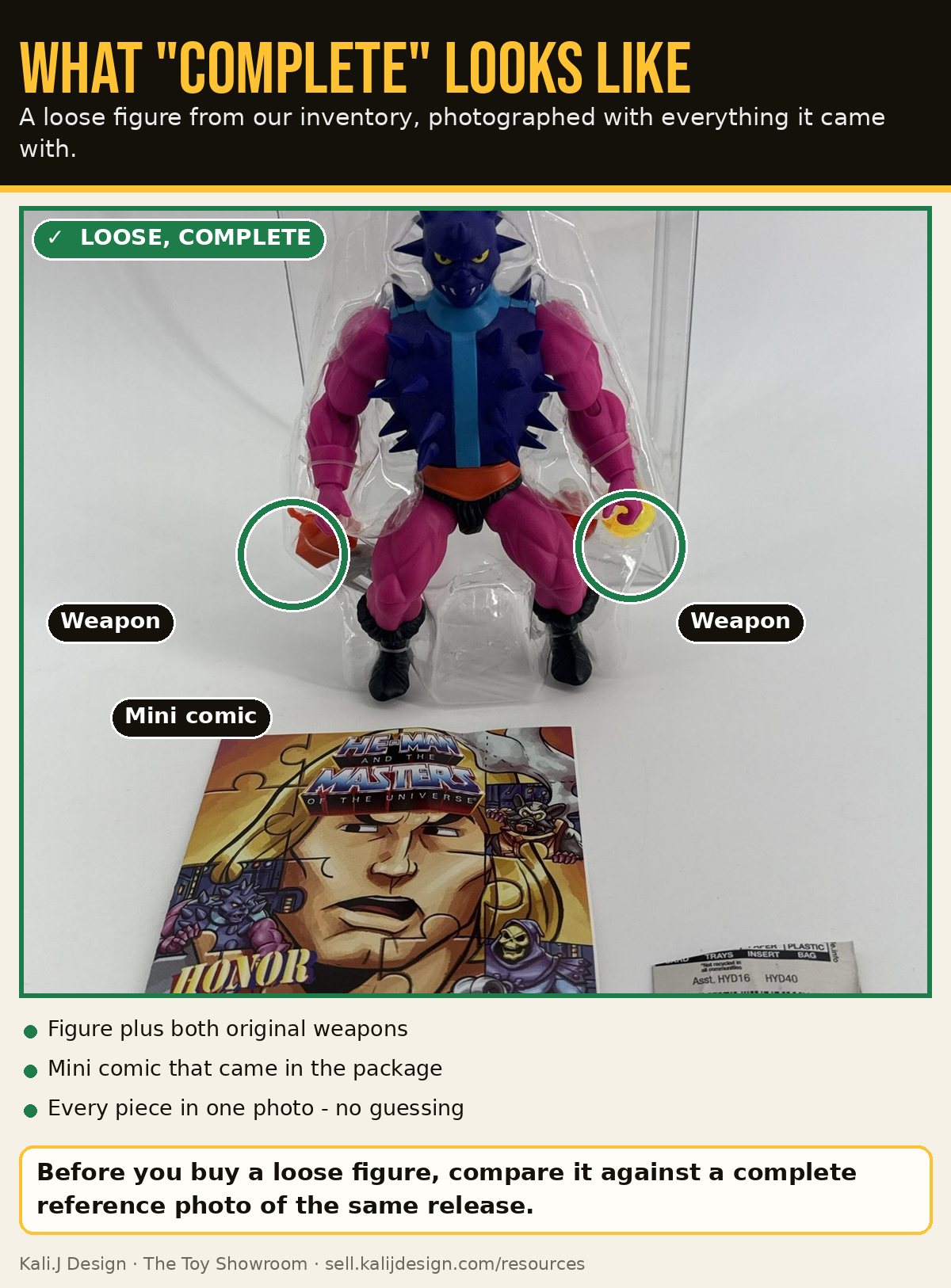
How can I tell an original figure from a reissue?
- Read every molded marking and photograph them.
- Identify candidate releases using a collector reference or the manufacturer's own guides.
- Compare sculpt, paint and accessories with photos of each candidate.
- If it is carded or boxed, read the card back: dates, barcodes and legal text often settle it.
- If it is valuable and you are still unsure, ask a specialist or use a grading service such as AFA.
Common mistakes
- Pricing a reissue from vintage sold pricesThey are different items. Search sold listings for the exact release.
- Assuming every accessory is originalCheck each one against references.
- Relying on a single fan pageSome older reference sites have lapsed or changed hands. Cross-check with more than one current source.
Related guides
Selling Action FiguresWhich action figures Kali.J Design buys - Masters of the Universe, Star Wars, Marvel, G.I. Joe, Transformers, NECA and more - plus how to identify them, condition, photos and common mistakes.
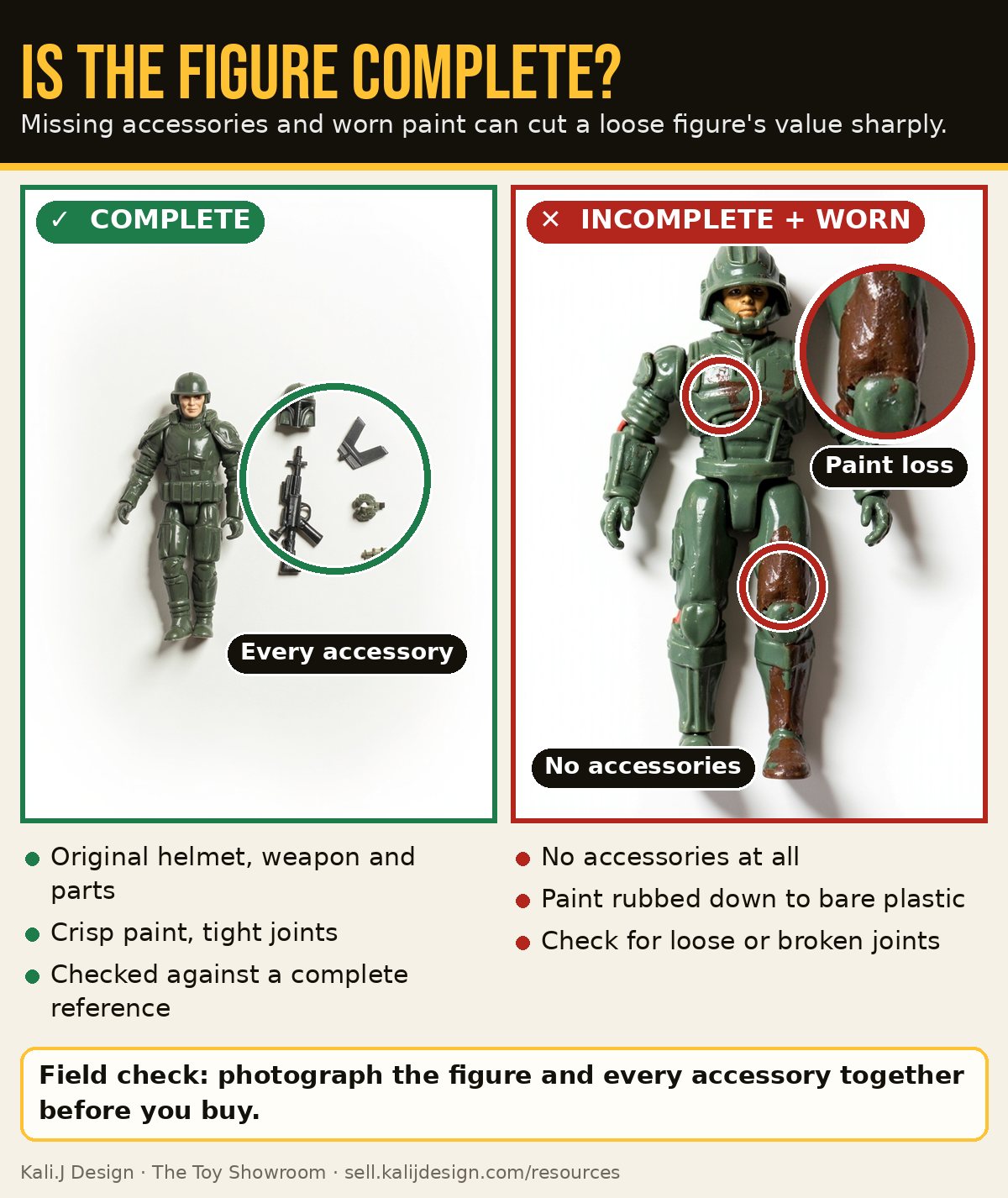
Loose Figure & Toy ChecklistHow to check whether a loose action figure or toy is complete and in good shape: accessories, paint wear, joints, discoloration, battery damage, repairs and modifications.
Is It Original? Authenticity ExplainedWhat original, reissue, reproduction, bootleg, counterfeit, aftermarket and restored actually mean for collectibles - and how each one affects identification and value.
Found one?
Seller Network members can snap a photo and ask the Sourcing Copilot. Anyone can send photos for an official quote based on real sold prices.
Looking to buy instead? Shop action figures at The Toy Showroom · Shop Star Wars at The Toy Showroom