The short answerFor clothing, read the tags first, then look for stains, holes, fading, pilling, stretching, cracked prints and alterations - held up to good light. For sneakers, turn them over: outsole wear and heel drag show real use, then check creasing, yellowing, sole separation, the size tag and the box.
Clothing
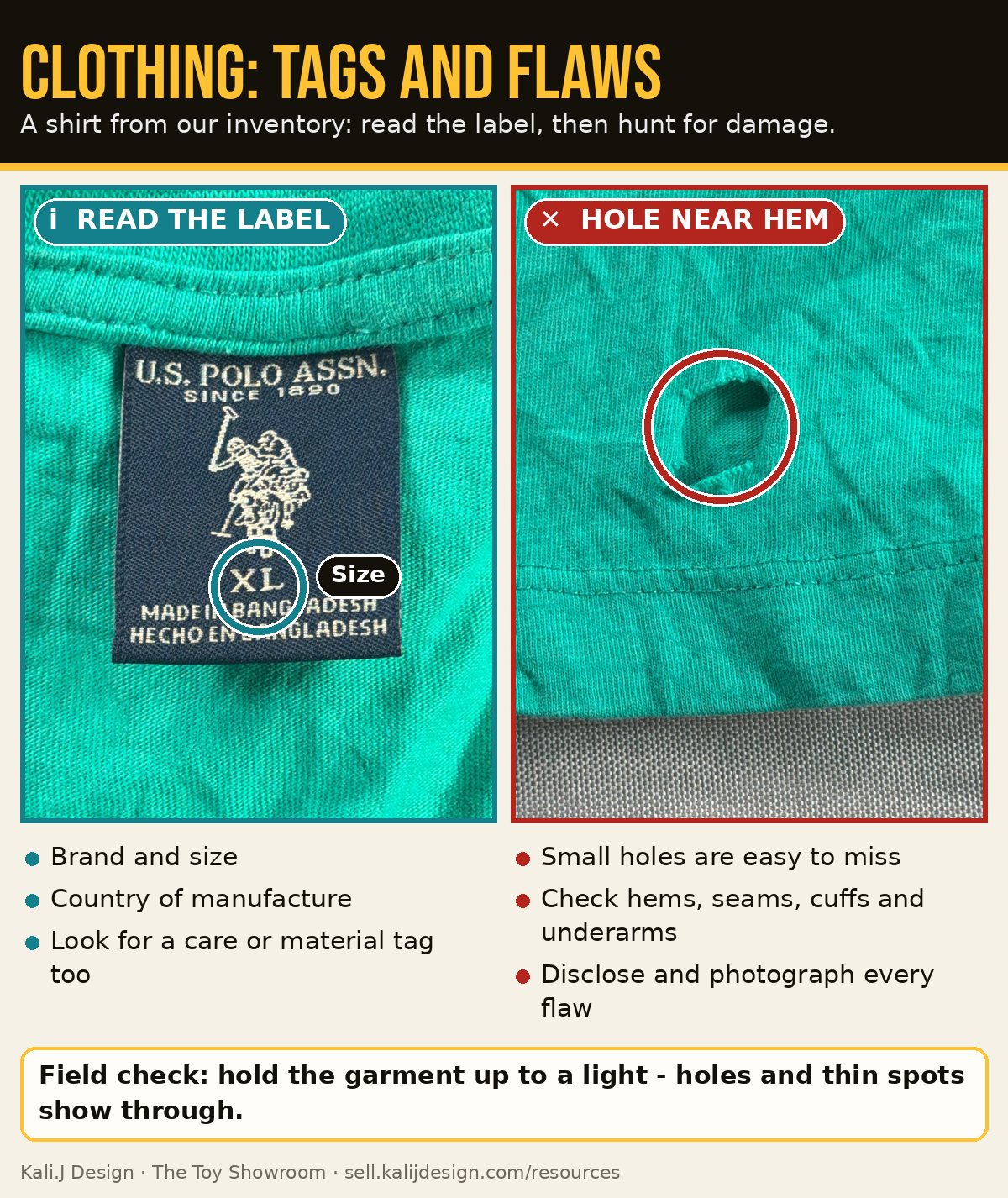
Stains
- What it is
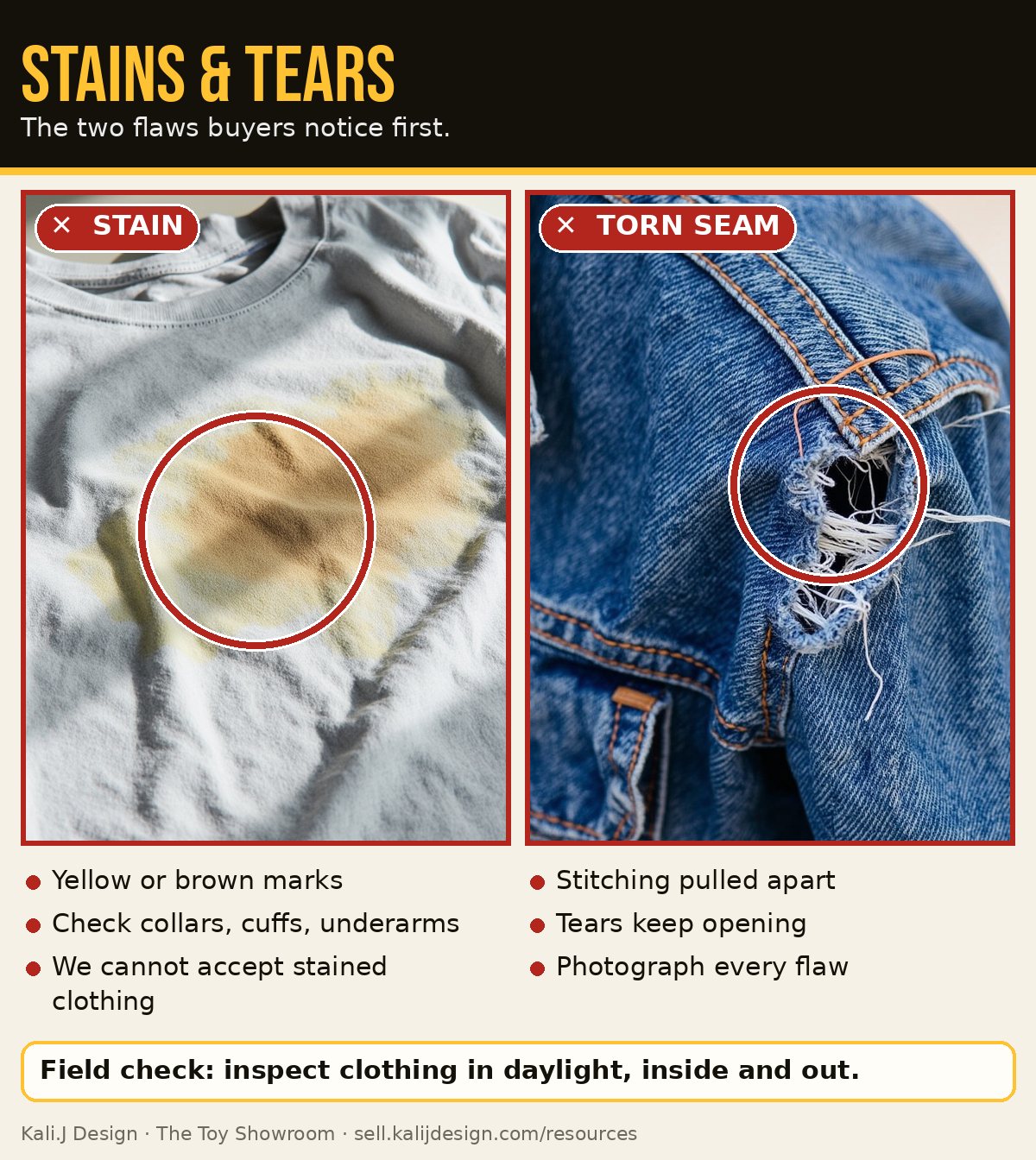
- Marks from food, sweat, makeup, rust, ink or storage.
- How to spot it
- Check collars, cuffs, underarms and the front in daylight.
- Why it matters
- Stains are the top reason clothing gets rejected. We cannot accept stained clothing.
- What to photograph
- Each stain close up.
- When it becomes serious
- Any stain in a visible area.
Holes
- What it is
- Moth holes, snags, pinholes, torn seams.
- How to spot it
- Hold the garment up to a light - holes and thin spots show through.
- Why it matters
- Small holes are easy to miss and disappointing for buyers.
- What to photograph
- Each hole, with a finger or ruler for scale.
- When it becomes serious
- Holes in the front or in seams that will keep opening.
Fading
- What it is
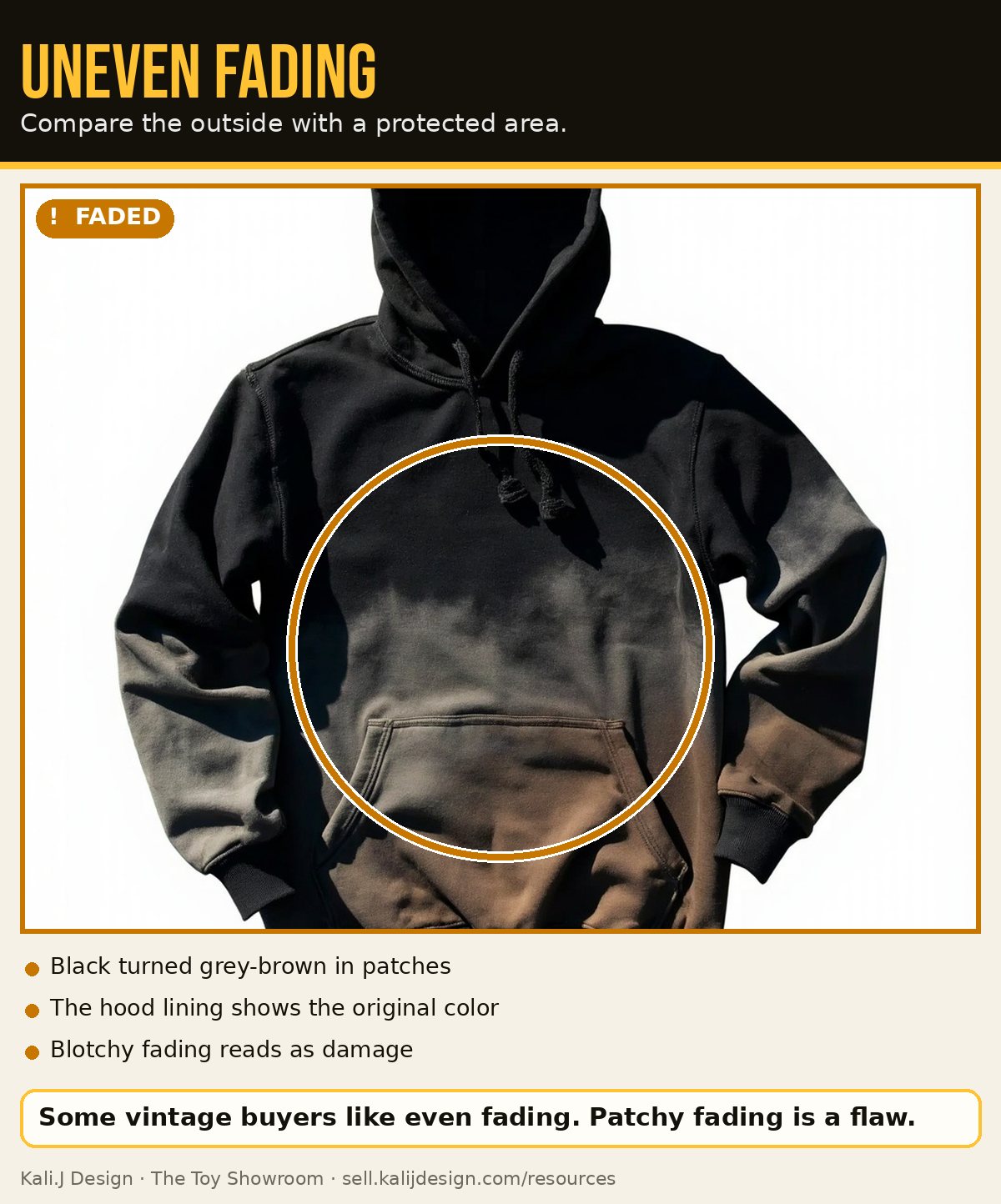
- Color lost from washing or sun.
- How to spot it
- Compare the outside with the inside of a seam or under the collar.
- Why it matters
- Some vintage buyers like natural fading; uneven fading looks damaged.
- What to photograph
- The faded area beside a protected area.
- When it becomes serious
- Blotchy or one-sided fading.
Cracking
- What it is
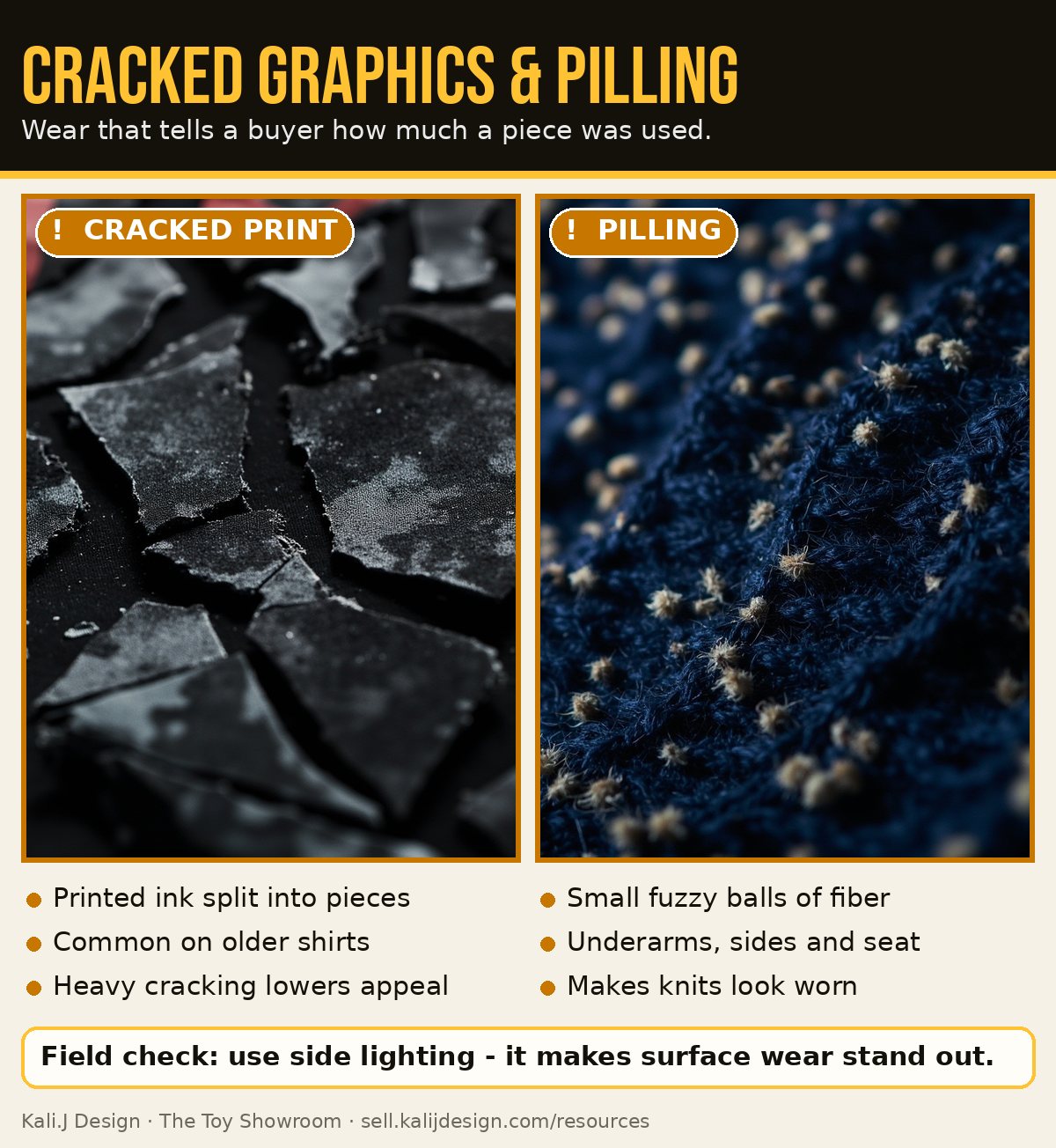
- Cracks in printed graphics.
- How to spot it
- Stretch the print gently and look for splits.
- Why it matters
- Cracked graphics are common on older shirts. Heavy cracking lowers appeal.
- What to photograph
- The graphic close up.
- When it becomes serious
- Missing chunks of the print.
Pilling
- What it is
- Small balls of fiber on the surface.
- How to spot it
- Under arms, sides and seat areas.
- Why it matters
- Makes the garment look worn.
- What to photograph
- The pilled area in side light.
- When it becomes serious
- Heavy pilling across the garment.
Stretching
- What it is
- Collars, cuffs and hems that have lost their shape.
- How to spot it
- Wavy necklines and loose cuffs.
- Why it matters
- Stretching cannot be fixed and changes fit.
- What to photograph
- The collar laid flat.
- When it becomes serious
- Obviously distorted shapes.
Alterations
- What it is
- Hemming, taking in, cropped or restitched areas.
- How to spot it
- Seams or stitching that do not match the rest of the garment.
- Why it matters
- Alterations change the size and must be disclosed.
- What to photograph
- The altered seam.
- When it becomes serious
- Undisclosed alterations.
Original tags
- What it is
- Retail hang tags still attached ("new with tags").
- How to spot it
- Check the tag is attached with its original fastener.
- Why it matters
- New with tags is a distinct and higher condition.
- What to photograph
- The tag front and back.
- When it becomes serious
- Only describe as "new with tags" if it truly is.
Size and material tags
- What it is
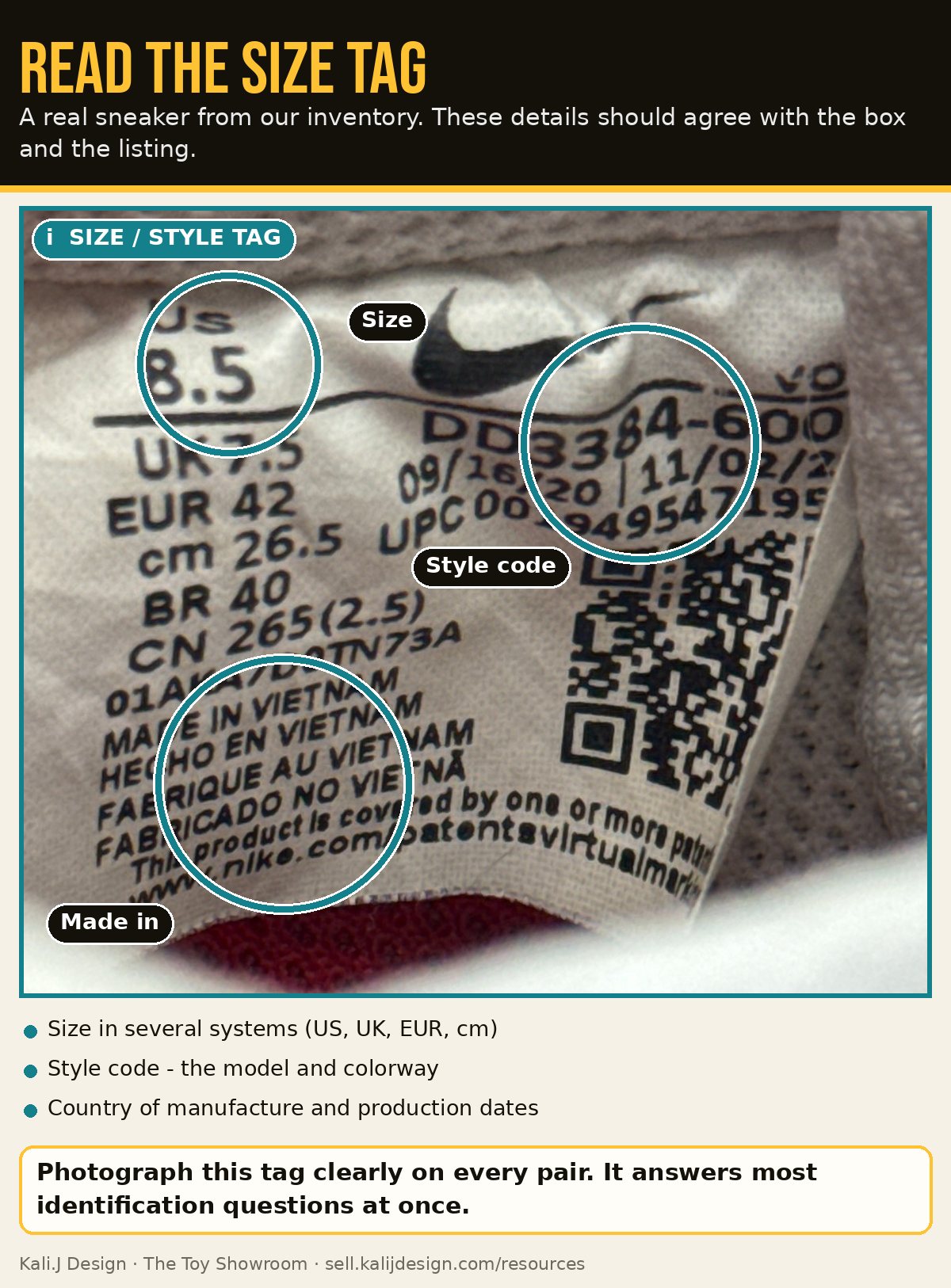
- The sewn-in labels showing brand, size, material and country of manufacture.
- How to spot it
- Neck label and side-seam care tag.
- Why it matters
- These identify the item and help catch mismatches. Missing or cut tags make identification harder.
- What to photograph
- Every label, readable.
- When it becomes serious
- Cut or missing size tags.
Odors
- What it is
- Smoke, perfume, mildew or storage smells.
- How to spot it
- Smell the garment, especially armpits and collar.
- Why it matters
- Odors are hard to remove and matter to buyers.
- What to photograph
- Note it in writing.
- When it becomes serious
- Smoke or mildew.
Sneakers
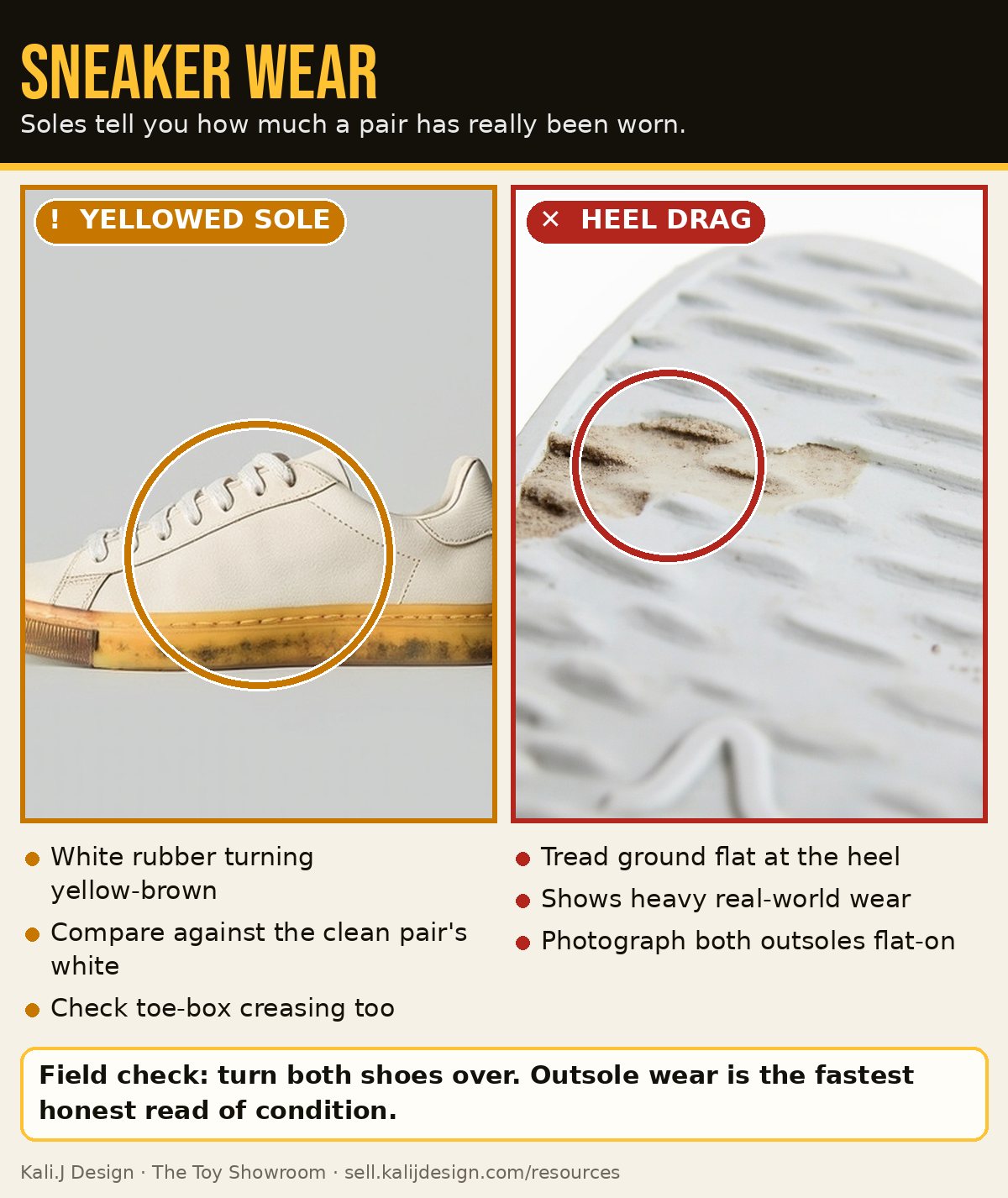
Outsole wear
- What it is
- Tread worn down on the bottom of the shoe.
- How to spot it
- Turn both shoes over and look at the forefoot and heel.
- Why it matters
- The most honest sign of how much a pair has been worn.
- What to photograph
- Both outsoles, flat-on.
- When it becomes serious
- Tread worn smooth in large areas.
Heel drag
- What it is
- Wear concentrated on the back edge of the heel.
- How to spot it
- The rear outer heel is ground flat or angled.
- Why it matters
- Shows heavy daily wear.
- What to photograph
- The heel close up.
- When it becomes serious
- When the wear reaches the midsole.
Creasing
- What it is
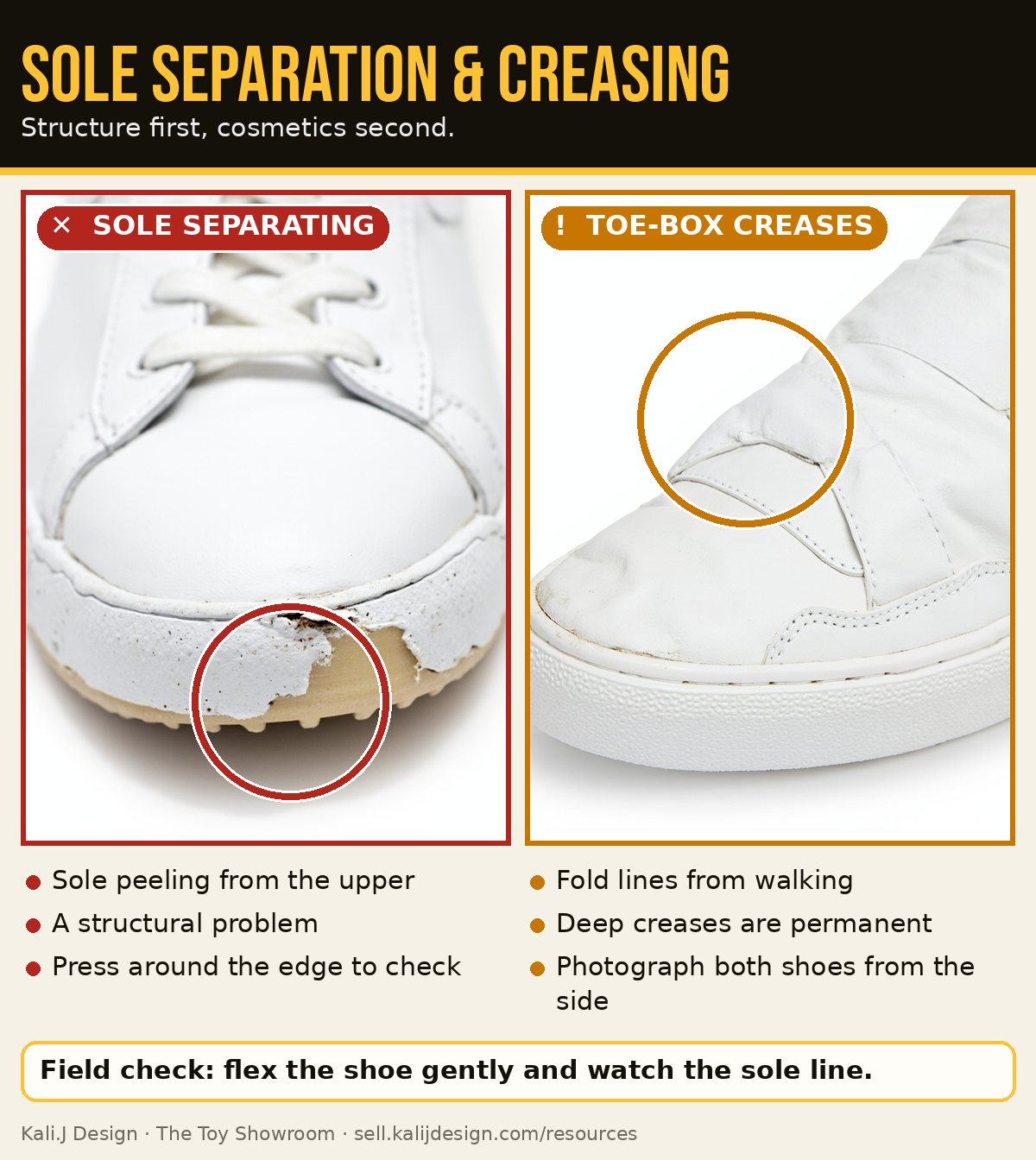
- Fold lines across the toe box from walking.
- How to spot it
- Look at the toe box from the side.
- Why it matters
- Deep creases are permanent and visible.
- What to photograph
- Both toe boxes from the side.
- When it becomes serious
- Cracked leather along the creases.
Sole separation
- What it is
- The sole coming unglued from the upper.
- How to spot it
- Press gently around the edge where the sole meets the upper.
- Why it matters
- A structural problem, not cosmetic.
- What to photograph
- Any gap, close up.
- When it becomes serious
- Any separation that opens when flexed.
Oxidation and yellowing
- What it is
- White rubber or translucent soles turning yellow with age.
- How to spot it
- Compare the sole color with the rest of the shoe in daylight. Some models are made with an intentionally off-white "vintage" sole, so check what the pair looked like new.
- Why it matters
- Unwanted yellowing makes a pair look older and more worn.
- What to photograph
- The sole in daylight.
- When it becomes serious
- Heavy yellowing on a model that should be white.
Box and accessories
- What it is
- The original box, lid, extra laces, tags and paper.
- How to spot it
- Check the box label matches the pair's size tag.
- Why it matters
- The original box adds appeal and helps identify the pair.
- What to photograph
- The box label and everything included.
- When it becomes serious
- A box that belongs to a different pair.
Odor
- What it is
- Wear odor or storage smell.
- How to spot it
- Smell the insoles.
- Why it matters
- Buyers notice immediately.
- What to photograph
- Note it in writing.
- When it becomes serious
- Strong odor.
Common apparel mistakes
- Photographing only the frontStains and holes are often on the back, cuffs and underarms.
- Skipping the solesFor sneakers, outsole photos are usually the most important photos.
- Guessing the sizePhotograph the tag instead. Brands size differently.
Related guides
Sneaker & Apparel AuthenticityWhat to check on sneakers and designer clothing - labels, style codes, stitching, construction, materials and packaging - and when professional authentication makes sense.
What Kali.J Design BuysThe collectibles Kali.J Design - The Toy Showroom in Upland, CA buys and consigns, category by category: what we look for, what to photograph, and our current interest.

Is It Original? Authenticity ExplainedWhat original, reissue, reproduction, bootleg, counterfeit, aftermarket and restored actually mean for collectibles - and how each one affects identification and value.
Found something?
Send us clear photos for a quote. Our offers are based on real sold prices, not asking prices. Local to Upland, CA - or ship it in.
Looking to buy instead? Shop shoes at The Toy Showroom · Shop vintage clothing at The Toy Showroom