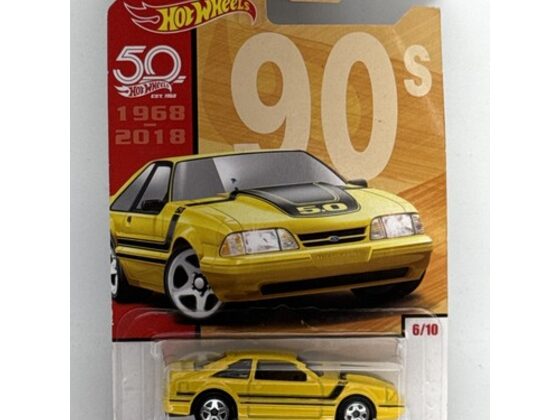
The single most common thing we hear from die-cast sellers is some version of the same worry: “There are too many. How am I supposed to photograph all of them?” One caller had already started, got through a fraction of a hundred-piece collection, and rang back because it was going to take all weekend.
You do not have to. Nobody prices a large collection car by car from photographs, ourselves included. What a collection needs is representative photos — enough to establish what is in there, what condition it is in, and where the value is concentrated. That is usually a dozen or so pictures, not a hundred.
Why every-item photography is the wrong instinct
It feels thorough, and thoroughness feels safe. But a hundred individual photos of basic Hot Wheels tell us almost exactly what eight photos of the same hundred cars tell us: it is a large lot of common mainline castings in good loose condition. The research that actually sets the number happens afterwards, against completed sales — and it is done at the level of what the collection is, not one car at a time.
Where individual photos genuinely matter is the opposite end: the handful of pieces that are not ordinary. A Super Treasure Hunt, a Red Line Club car still in its shipper, a boxed 1:18, an early Matchbox in its original box. Those are worth photographing properly, because they are priced individually and their condition drives their value. Spending your effort there instead of on the common cars is simply a better use of an afternoon.
What to send, in order
- The whole thing, in place. Two or three wide shots of the bins, cases, or shelves before anything is unpacked. This is the photo that tells us the true size of what you have, and it is the one people most often skip.
- A typical handful. Lay out eight or ten cars that are representative of the bulk — not the best ones — and photograph them together. This sets the baseline condition for everything else.
- The good stuff, individually. Anything you believe is special, or that simply looks different from the rest: premium wheels, unusual packaging, a serial number, a club car in its mailer.
- One base, sharp and readable. Flip a car over and photograph the base so the casting name and markings are legible. It tells us more about what era we are dealing with than a dozen top-down shots.
- Anything damaged, honestly. Creased cards, cracked blisters, water damage, sun fade. Showing it costs you nothing — we will find it at the counter anyway — and it saves the awkward conversation where an offer moves after you have driven over.
How many photos the intake actually takes
Up to 100 photos in a single submission. An older version of this page said eight, and so did the uploader itself for a while — it was wrong, and it cost us at least one seller who had already photographed eighty sealed figures and was told to do it again in batches. There are no batches. Attach everything you have in one go.
And if the collection is already photographed somewhere — a Reddit post, an Imgur album, Google Photos, Drive — you can paste that link instead of uploading anything at all. We will review the whole collection from there. Nobody should have to re-shoot work they have already done.
What we look at once the photos arrive
The same four things, in roughly this order:
| What | Why it moves the number |
|---|---|
| Composition of the lot | A thousand mainline cars and a hundred premium castings are very different collections, even at the same piece count. |
| Condition, overall | Loose and played-with, loose and clean, or carded. For carded cars, the card matters as much as the car — see our packaging condition guide. |
| The standouts | The pieces priced individually rather than as part of the bulk. This is where an afternoon of good photos pays. |
| What it has actually sold for | Completed sales, not asking prices. An unsold listing at $80 is not evidence of $80. |
That last point is worth dwelling on, because it is the one that surprises people most. Anyone can list a car for any price; what a car sold for is a fact. Our quotes are built from completed sales, which is why an offer sometimes lands below what you saw on a listing page. It is also why the offer holds up — we are not guessing.
Common things that change a die-cast valuation
- Base year is not the car’s year. The copyright year on the base is the casting’s, usually a year before the car was released. It is the most common reason a recent car gets described as vintage. Our Hot Wheels and die-cast buying page goes into the markings in detail.
- Scale changes everything. A hundred 1:64 cars and a hundred 1:18 cars are not comparable collections — different buyers, different shipping, different money. If you have a mix, say so.
- Mixed vehicle collections are welcome. Model cars, model kits, die-cast planes and slot cars often arrive together, and there is no need to separate them before sending photos.
- Storage matters more than age. A collection kept in a dry closet and one kept in a garage through Inland Empire summers can look identical in a photo and be worth different money. Our guide on storage and humidity explains what to look for.
If the collection was inherited
A lot of the large die-cast collections we see belonged to someone who has died. Two things usually help. First, you do not need to understand the collection before selling it — that is our job, and nobody expects a family member to know what a Treasure Hunt is. Second, take the wide shots before anyone starts sorting or dividing it. Collections are easiest to value while they are still intact, and sorting sometimes separates a set that was worth more together.
Our guide on pricing a whole inherited collection covers the wider situation, including the parts that are not about money.
What happens after you submit
- Your photos go into our buying review, attached to your submission.
- Our team researches real completed sales for the pieces that drive the value.
- You get a cash-buyout offer back on the same thread you started.
- If you accept, we text you a link to pick your drop-off time, and you are paid in Upland once the collection is checked.
You are welcome to call or text with questions at any point — that is what we are here for. The photos themselves need to go through the sell intake, because that is where they reach the people doing the research.