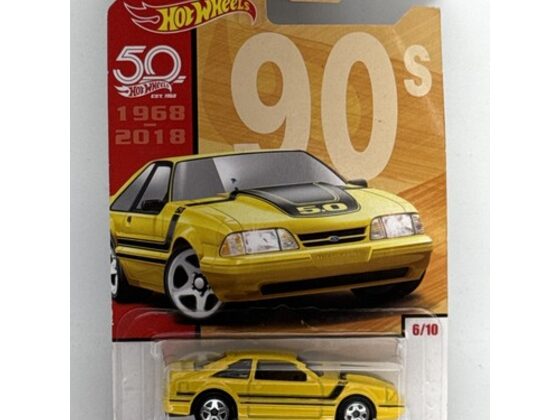
The most uncomfortable conversation in this business goes like this. Somebody looks up a car they own, finds it listed at $80, and calls expecting a number in that neighbourhood. What they get is lower — sometimes a lot lower — and it feels like a lowball. It usually is not. It is almost always the difference between two numbers that look identical on a screen and mean completely different things.
Why the gap is so wide in die-cast specifically
Every collectible category has an asking-versus-sold gap. Die-cast has one of the widest, for reasons that are structural rather than anybody’s fault:
- The supply is enormous. Basic Hot Wheels and Matchbox cars are produced in quantities that make almost any individual mainline casting easy to find. When thousands of the same car are available, the price is set by the cheapest willing seller, not the most hopeful one.
- Optimistic listings never expire from view. A car listed at $80 that nobody buys sits there indefinitely, relisting itself. Search results are full of these. They look like a market. They are a queue of people who have not sold anything.
- The search terms inflate themselves. Sellers who want a high price write “RARE”, “HTF” and “VHTF” into titles. The word in the title does not change what the car is, but it does change what you see when you search.
- Shipping hides inside the number. A $12 car with $6 shipping and a $9 car with free shipping are close to the same transaction. Compare the total, not the headline.
How to check a sold price yourself, properly
You do not need us to do this, and we would rather you could. On eBay, run your search, then use the filter for Sold items — not “completed”, which also includes listings that ended without a buyer. What you are left with is a list of prices somebody actually paid. Then read it carefully:
- Look at the count, not the top result. One sale at $95 among fourteen sales between $9 and $16 is an outlier, not a price. If there are fewer than about three comparable sales, you do not really have a number yet — you have an anecdote.
- Check it is the same thing. Same casting, same series, same year, same colour variant, and the same condition and packaging state. A carded car and a loose car of the same casting are two different products.
- Watch for lots sold as one listing. “Hot Wheels lot $140” is often sixty cars. Divide before you get excited.
- Discount the graded and cased sales. A car in a professionally graded slab or a protector case is priced partly for the grading, and that is not what a loose car in a bin is worth.
- Mind the currency and the country. A strong sale in another market with expensive international shipping is not a price you can get locally.
How we use sold prices — and the rule we had to write
Our offers are researched against completed sales. That is not a marketing line; it is a hard internal rule, and it exists because of a specific failure. A batch of items came through in which most pieces had genuine completed-sale evidence behind them, and a few did not — those few had been valued from active listings instead. One of them was a single 1:64 car carrying a market value of $235. Nothing about that car was worth $235. The asking-price pool simply contained optimists, and the valuation believed them.
Since then the rule is that a quote is not fit to put in front of anyone until every item in it carries at least one price-verified completed sale. Active listings and asking prices do not count towards that, at all, no matter how many of them there are. If we cannot find real sold evidence for a piece, the honest answer is that we do not have a number for it yet — not a confident-sounding number built on wishes.
What this means for a bin of common cars
Here is the honest shape of it. Across the die-cast we have sold ourselves, the typical piece is a modest one — our 1:64 sales cluster around the mid-teens, and across all scales the middle of our die-cast sales sits around $20. That is after photographing, listing, storing, answering questions and shipping each one.
Which is why the value in almost every large die-cast collection is concentrated in a small number of pieces rather than spread evenly across the count. Two hundred common mainline cars and six good ones is a completely normal collection, and the six are where the money is. Our guide to selling a large die-cast collection explains how those pieces get pulled out of a bulk lot without you having to identify them yourself, and identifying die-cast by scale, maker and model covers how to recognise them if you want to look yourself.
Where an asking price is useful
It is not worthless information. Active listings tell you about supply: if there are two hundred of your car listed right now, that is a real fact about how easy it is to find, and it caps what anyone will pay. What an asking price cannot do is tell you what your car is worth. Use it to understand the competition, never to set the price. The gap is wider still on heavy items, which is covered in selling 1:18 and large-scale die-cast.
| Question | Which number answers it |
|---|---|
| What is my car worth? | Completed sales, three or more, same casting and condition. |
| How hard is this to find? | Active listings — the count, not the prices. |
| How fast would this sell? | Sold dates. Fourteen sales this month is a different market from two last year. |
| Is my card or blister condition hurting me? | Compare sold prices across condition, and read our packaging condition guide. |
Reading condition into the price
Two sold listings for the same casting can be far apart because one card was flat and sharp and the other was creased. For carded die-cast the card is part of the item, and for loose cars the paint, tampos, wheels and axles decide it. Both are covered in detail in our die-cast condition guide, and the identification markings — Premium callouts, Real Riders, base markings, Treasure Hunt paint — are on our Hot Wheels and die-cast buying page. If something looks like it might be a Super Treasure Hunt or a repainted car sold as one, the authenticity guide is the place to start.
If you want us to do the research
You are welcome to. Send photos through the sell intake and our team researches real completed sales for the pieces that carry the value, then comes back with a cash-buyout figure or a consignment recommendation. What we will not do is quote you a number off an asking price, because the first time that happened it produced a $235 valuation on a car worth a few dollars, and nobody is well served by that.
More on how we work, and on selling generally, is in the Seller Network resources.